Quotes from Buckminster Fuller
“Everyone is born a genius, but the process of living de-geniuses them.”
“If you want to teach people a new way of thinking, don't bother trying to teach them. Instead, give them a tool, the use of which will lead to new ways of thinking.”
There is nothing in a caterpillar that tells you it's going to be a butterfly.
R. Buckminster Fuller
Our value is based on the problems we can solve.
One of Fuller’s most powerful beliefs was that our value is tied to the size of the problems we can solve. He taught that we should embrace our problems, viewing them not as roadblocks, but as opportunities for learning and growth. In Fuller’s eyes, the true reward for solving one problem was being entrusted with even bigger ones. This mindset is critical not only to personal development but also to shaping the world around us.
Embrace Problems as Opportunities for Growth.
Fuller saw challenges as catalysts for growth. He often emphasized that life is a series of problems meant to be solved, and our worth is determined by the complexity of the problems we tackle. He once said, "There is no such thing as a failed experiment, only experiments with unexpected outcomes." Rather than seeing failure as a dead end, he viewed it as a valuable part of the learning process, a necessary step toward eventual success.
Embracing problems requires a shift in perspective. Instead of viewing difficulties as something to avoid, Fuller encourages us to see them as opportunities for development. Each problem is a chance to sharpen our skills, expand our thinking, and grow into more capable versions of ourselves. This growth mindset, popularized by psychologist Carol Dweck, aligns closely with Fuller’s thinking. Those who adopt this mindset understand that abilities are not fixed; they are cultivated through effort, resilience, and the willingness to face bigger challenges.
For entrepreneurs, especially, this is a key lesson. Building a business is fraught with obstacles — from cash flow issues to market disruptions — and those who thrive are the ones who embrace these problems as part of their journey. The more complex the problem, the greater the opportunity to innovate and evolve. In doing so, we become more capable of solving even larger challenges in the future.
The Reward for Solving Problems? Bigger Problems
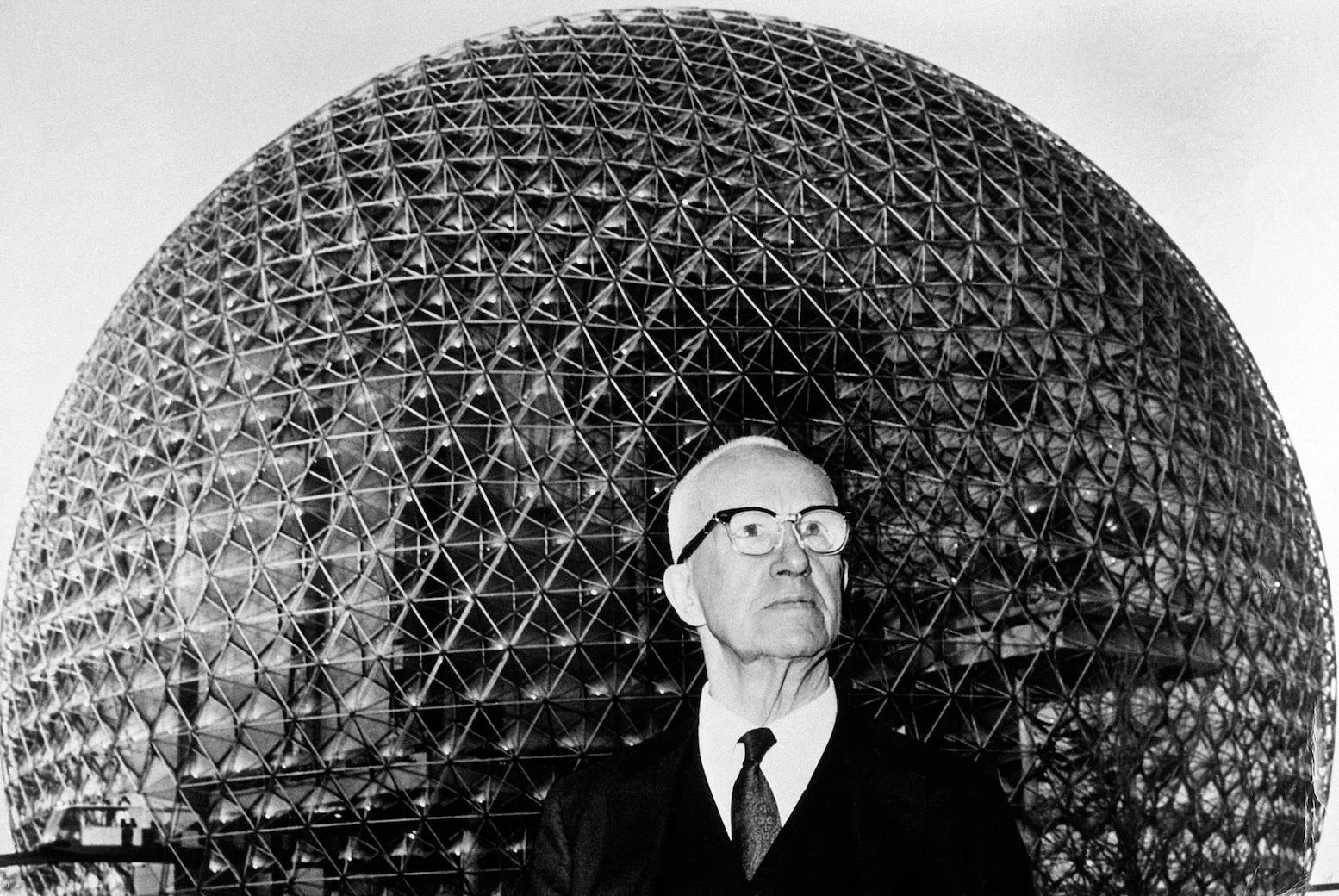
Fuller believed that solving problems was humanity’s greatest asset. His work on the geodesic dome is an excellent example of this. When faced with the challenge of creating more efficient, sustainable housing, he didn’t just patch together existing solutions. He embraced the problem and engineered something entirely new. The geodesic dome wasn’t just a design innovation — it was a solution to housing shortages, environmental concerns, and economic efficiency, all wrapped into one.
In today’s world, problem-solving is the currency of progress. The reward for solving one issue, Fuller believed, is that we are presented with even bigger challenges. This isn’t a burden — it’s an opportunity. The problems we solve today pave the way for bigger and more meaningful contributions tomorrow. As entrepreneurs, our ability to tackle increasingly complex problems becomes our greatest asset.
Take Elon Musk, for example. After successfully launching PayPal, Musk turned his attention to far bigger problems: sustainable energy (Tesla), space exploration (SpaceX), and even the future of human civilization (his plans for Mars colonization). Like Fuller, Musk embraces massive challenges, knowing that the reward for solving them is the opportunity to impact the world on a grander scale.
Don’t Fight the Old — Build the New
Fuller is perhaps most famous for his advice on paradigm shifts. He taught that we shouldn’t waste our energy attacking old systems. Instead, we should focus on creating new, better systems that render the old ones obsolete. He famously said, "You never change things by fighting the existing reality. To change something, build a new model that makes the existing model obsolete."
This idea is at the heart of disruptive innovation. Consider how Apple didn’t just improve on old computers; they created entirely new ways for people to interact with technology, starting with the Mac, then the iPhone, which revolutionized the mobile industry. Apple’s approach — much like Fuller’s — wasn’t to fight against what already existed, it was to offer something so superior that it made the old ways irrelevant.
For entrepreneurs and innovators, this lesson is invaluable. Instead of trying to improve broken systems or outdated models, create something entirely new that addresses the root problem in a better way. By doing this, you are no longer competing with the old — you are shifting the paradigm entirely.
Vision and Purpose: Building a Better Future
Another crucial aspect of Fuller’s philosophy was his belief that technology and innovation should serve humanity. He was a strong advocate for aligning our individual success with the broader success of the planet. His approach was holistic: he believed that each of us has a responsibility to contribute to the future by solving problems that matter.
"We are called to be architects of the future, not its victims," Fuller once said. This idea is as powerful today as it was then. Entrepreneurs and problem-solvers should focus on creating solutions that benefit not only their immediate circumstances, they should also address the world’s greater needs. Visionary companies today, like Tesla or Patagonia, embody this approach, creating products that are not only profitable but also address some of the world’s most pressing issues, from climate change to sustainable production.
Learning from Failure and Moving Forward
For many, the fear of failure holds them back from tackling big problems. Fuller, however, believed that failure is simply a part of the learning process. He encouraged people to view every setback as an opportunity to improve and grow. As Thomas Edison, another "crazy one," famously said, "I have not failed. I've just found 10,000 ways that won't work."
Fuller’s perspective on failure is liberating: when we stop fearing it, we open ourselves up to bigger, more audacious challenges. Embracing failure as part of the journey allows us to see problems not as insurmountable obstacles, they become stepping stones to success. With time, the emotional charge of failure diminishes, and we can look back with clarity on the lessons learned and the strength gained.
Rewiring Our Neurology for Success
To embrace Fuller’s mindset requires a deep shift in how we think and perceive challenges. Techniques like Neuro-Linguistic Programming (NLP) can help us rewire our thought patterns, replacing fear and self-doubt with empowerment and possibility. NLP encourages us to break free from limiting beliefs and reframe problems as opportunities for growth.
One NLP technique is the concept of "modeling" — studying those who have successfully solved big problems and adopting their behaviors and mindsets. By immersing ourselves in the stories of visionaries like Fuller, Musk, or Oprah Winfrey, we can begin to internalize their approaches to problem-solving, resilience, and innovation.
Conclusion: The Legacy of the Crazy Ones
Buckminster Fuller’s wisdom teaches us that the size of the problems we solve defines our impact on the world. By embracing problems as opportunities for growth, creating new paradigms, and aligning our vision with the greater good, we can build a future that not only transforms our own lives but the world around us.
The "crazy ones," celebrated in Apple’s famous ad campaign, are those who dare to think differently. They follow Fuller’s wisdom by solving big problems, building new systems, and shaping the future. As Fuller said, we are all "architects of the future." The only question that remains is: What kind of future are we building?
About the Author: Peter Terrill is the Director & Chief Venture Design Officer of V1 Scale and a thought leader in Success Architecture. Having navigated large-scale corporate environments, he now focuses on building resilient, high-growth digital pipelines. You can follow his personal journey and insights at www.peterterrill.com.