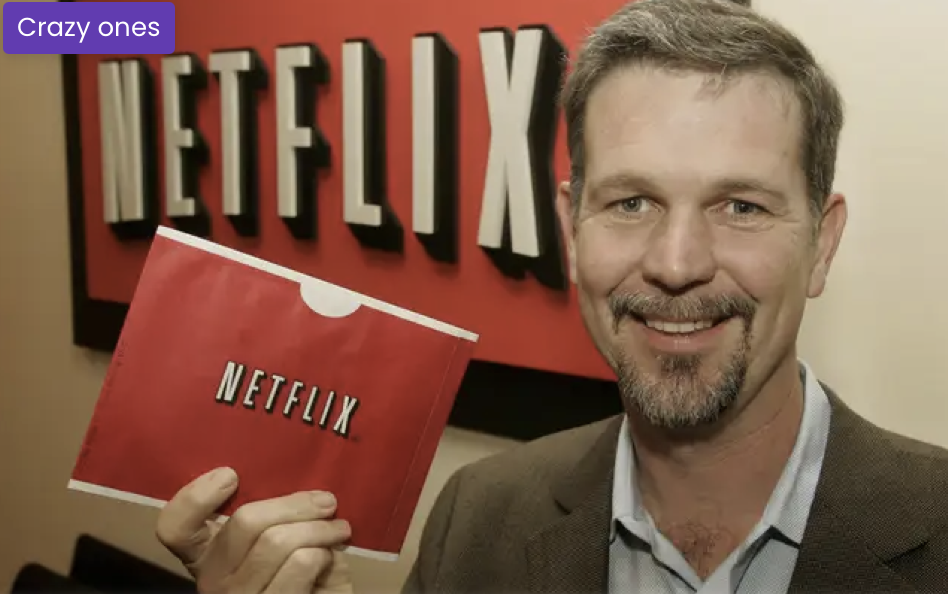
From DVDs to Streaming: The Netflix Journey
In 1997, Reed Hastings and Marc Randolph co-founded Netflix with a simple idea: mailing DVDs directly to customers. This model offered convenience and flexibility compared to traditional video rental stores. However, they didn’t stop there. The co-founders knew the mail-order model wasn’t the endgame.
With the rise of the internet, they envisioned a future where movies and TV shows could be streamed online, eliminating physical media altogether.
In 2007, Netflix launched its streaming service—a bold pivot that marked the beginning of a new era in entertainment. The company also began investing heavily in original content, starting with House of Cards in 2013. This strategy not only solidified its position as a streaming leader but also transformed Netflix into a major player in Hollywood.
The Blockbuster Missed Opportunity
Netflix’s rise is often contrasted with Blockbuster’s fall. In the year 2000, Hastings and Randolph approached Blockbuster with an offer to sell Netflix for $50 million. At the time, Blockbuster was the giant of video rentals, with thousands of stores and a dominant market position. Confident in their brick-and-mortar business model, Blockbuster’s executives dismissed Netflix as a niche company with no future.
Netflix, however, was already planning for a digital future. By 2007, Netflix had embraced streaming, while Blockbuster clung to its store-based model and failed to innovate. By 2010, Blockbuster filed for bankruptcy. Today, Netflix is valued at approximately $140 billion, making the $50 million price tag one of the greatest missed opportunities in business history.
Netflix’s journey wasn’t without hurdles:
- 1. Early Struggles with Funding:
Convincing investors to back an unproven mail-order DVD model was a challenge. The company’s eventual pivot to streaming also required substantial investment in technology and content rights. - 2. Competition:
From Hulu to Disney+ to Amazon Prime Video, Netflix has faced relentless competition. Staying ahead has required constant innovation, from introducing personalized recommendations to producing high-budget original series and films. - 3. Global Expansion:
Scaling globally brought challenges in terms of localizing content, navigating regulations, and building infrastructure in new markets. However, Netflix embraced these challenges, tailoring its offerings to diverse audiences worldwide.
As of 2024, Netflix is not just a streaming service—it’s a cultural phenomenon. With over 230 million subscribers worldwide, it produces some of the most talked-about content, from Stranger Things to The Crown. Its journey from mail-order DVDs to a $140 billion entertainment empire exemplifies the power of adaptability, customer focus, and bold vision.
Lessons from Netflix: Be the Disruptor
Netflix’s story offers valuable lessons for entrepreneurs and businesses:
- Embrace Change:
Anticipate trends and pivot before the market demands it. Netflix’s transition to streaming was risky but necessary. - Solve Customer Problems:
Netflix identified and solved pain points in traditional video rentals—late fees, limited selection, and inconvenience. - Invest in the Future:
Building a library of original content and advancing streaming technology set Netflix apart from competitors. - Disrupt Yourself:
Reed Hastings has said, “Companies rarely die from moving too fast, but they frequently die from moving too slowly.” Netflix prioritized innovation over maintaining the status quo. - Learn from Failure:
Every pivot and risk Netflix took came with uncertainties, but they embraced mistakes as stepping stones for growth - Think Big, Act Bigger:
Netflix wasn’t just looking to compete with Blockbuster—it aimed to redefine how the world consumes media. - Play the Long Game:
Hastings and Randolph understood that short-term profits might need to be sacrificed for long-term dominance. - Leverage Technology:
Netflix’s algorithms and personalized recommendations revolutionized the customer experience, making technology a key differentiator. - Take Calculated Risks:
The move into original content was expensive and risky, but it paid off, turning Netflix into a global entertainment powerhouse. - Create a Scalable Model:
From the beginning, Netflix designed its business to scale globally, giving it a competitive edge as streaming gained popularity worldwide.
One of the most striking moments in Netflix’s journey was its willingness to go all in. From significant investments in original content to massive technological infrastructure for global streaming, the company repeatedly demonstrated that calculated risks are necessary for exponential rewards.
Blockbuster’s downfall, on the other hand, underscores the cost of clinging to the past. Complacency in the face of innovation can be fatal.
About the Author: Peter Terrill is the Director & Chief Venture Design Officer of V1 Scale and a thought leader in Success Architecture. Having navigated large-scale corporate environments, he now focuses on building resilient, high-growth digital pipelines. You can follow his personal journey and insights at www.peterterrill.com.